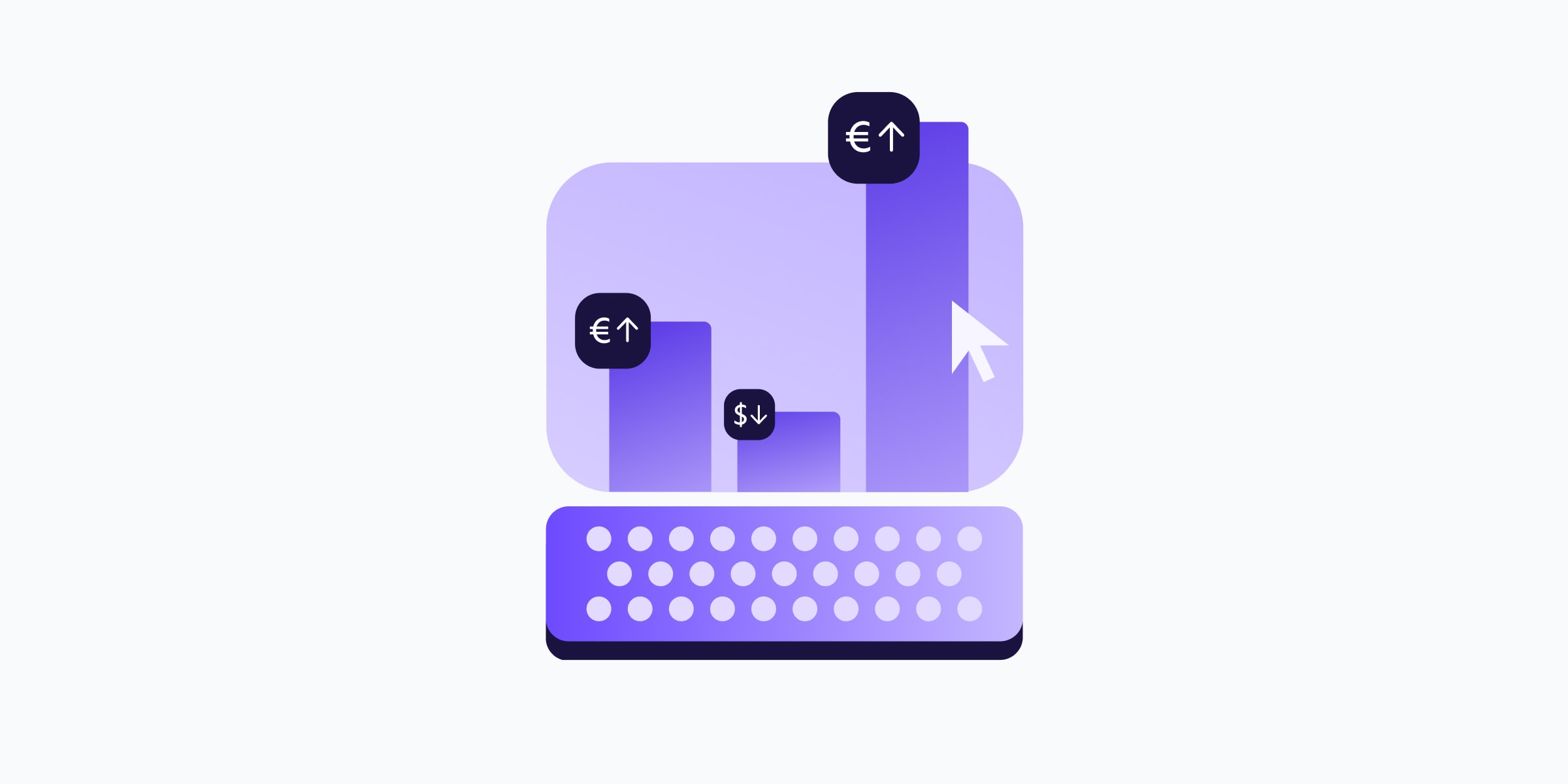
Dynamic pricing (also called surge pricing, algorithmic pricing, or demand-based pricing) means changing the price of a product or service in real time in response to market conditions. The most visible factor is demand, such as Uber raising fares when it rains, or ticket sellers pushing up prices for a popular concert.
- What is dynamic pricing?
- Dynamic pricing vs. surveillance pricing
- What is surge pricing?
- How does dynamic pricing work?
- Why dynamic pricing feels unfair
- Dynamic pricing isn’t always bad
- Real-world examples of surge and dynamic pricing
- How to get the best prices when shopping online
- Protect yourself against dynamic and surveillance pricing
Dynamic pricing isn’t new. American Airlines was using an early form(नई विंडो) of it, known as yield management, in the late 1970s and early 1980s. What has changed is the speed and scale at which it’s used. Algorithms now recalculate prices 24/7, so the price you see at lunchtime may not be the price you see later that evening.
Companies are understandably keen on anything that increases their profits. For consumers, though, the practice can seem unfair(नई विंडो). This article explains how dynamic pricing works, why it feels the way it does, and how you can make it work for you rather than against you.
What is dynamic pricing?
Dynamic pricing means adjusting prices in real time based on factors such as demand, inventory levels, competitor pricing, and time of day. Instead of setting a fixed price, retailers use that keep recalculating what to charge.
The practice has spread fast. Economist Alberto Cavallo studied large US retailers that sell both online and in stores. He found that the share of their prices changing each month roughly doubled(नई विंडो), from 15% in 2008–10 to almost 30% in 2014–17. He attributes the rise to online competition and algorithmic pricing.
Today, prices move faster still. Throughout 2025, web data firm Decodo tracked 12 products(नई विंडो) on each of more than 120 online stores in 40 countries, checking prices every four hours. Amazon was the most active retailer(नई विंडो) in the study, with 116,509 price changes over the year, followed by Walmart with 68,926 and Kroger with 55,601. Fashion and electronics saw the most changes of any product category.
The following chart compares various common pricing practices, ordered from least to most personally targeted.
Practice | Where you’d encounter it | What’s actually changing the price | Do two people see different prices at the same moment? |
|---|---|---|---|
| Peak pricing | Train off-peak tickets, electricity during busy hours, motorway tolls | A timetable the company published in advance, because busy periods are predictable | No. Everyone pays the same rate at the same time |
| Dynamic pricing | Shop prices online, hotel rooms, concert tickets | What’s happening right now: how many people want it, how much stock is left, what rivals charge, how close the event is | Mostly no. The price moves over the day, but whoever looks at that moment sees the same figure |
| Surge pricing | Ride-hailing apps, food delivery | Too many riders, not enough drivers, in one specific area | No if you’re standing next to each other. Yes if you’re a few streets away, in a different pickup zone |
| Promotional pricing | Supermarket apps, “members only” deals, end-of-season sales | What the seller wants this month: clear old stock, win new customers, ride a seasonal bump | Yes, whenever deals are aimed at particular shoppers. No, when a sale is open to everyone |
| Auctions | Online marketplaces, ad space on websites | Other buyers. The price is whatever people are willing to outbid each other with | Yes, usually. Winners often pay what they bid, or just enough to beat the next person |
| Surveillance pricing | Some online shops, grocery and pharmacy loyalty apps | What the seller knows about you: where you are, what device you use, what you’ve browsed and bought, and a guess at how much you can afford or how badly you need it | Yes. Two people can be quoted different amounts for the exact same item |
Dynamic pricing vs. surveillance pricing
Dynamic pricing is often confused with surveillance pricing, but they work on different inputs:
- Dynamic pricing responds to the market: demand, supply, competitors, and timing. Everyone shopping at the same moment under the same conditions sees the same price.
- Surveillance pricing responds to you: Your location, device, browsing history, and purchase behavior are used to estimate how much you personally are willing to pay.
Learn more about surveillance pricing: How your data determines what you pay
In practice, the two are converging. Some companies use market-driven dynamic pricing as a base layer, and then apply personalized adjustments on top. Either way, the price you see changes, and it isn’t necessarily the best price available. But knowing which mechanism you’re dealing with tells you which counter-strategy works. You beat dynamic pricing with timing, and surveillance pricing with privacy.
What is surge pricing?
Surge pricing is the most visible form of dynamic pricing, resulting in a sharp, temporary price rise when demand suddenly outstrips supply.
The term is most closely associated with ride-hailing. Uber first “went dynamic(नई विंडो)” for Halloween in October 2011 and described the principle simply: “We raise the price of our service when the supply of available cars gets tight.”
The idea is now so familiar that the phrase alone can cause a backlash. In February 2024, Wendy’s CEO told investors the chain would test “dynamic pricing” on digital menu boards. After an outcry over “surge pricing”(नई विंडो) burgers, Wendy’s issued a clarification saying it would not raise prices “when our customers are visiting us most”.
Uber’s original justification was that higher fares would pay drivers more, drawing more cars onto the road. But this no longer seems to apply:
- During a Chicago train outage in March 2022, riders paid fares set by a surge multiplier, but drivers received a flat surge fee(नई विंडो) instead of a share of the multiplied fare.
- Uber and Lyft have since moved to upfront pricing. Riders are quoted a fixed price before booking, and drivers are offered a separately calculated fare. This “decoupled what the rider pays from what the driver earns(नई विंडो)”, with the platform keeping the difference.
- Columbia Business School’s Len Sherman estimates Uber’s take rate rose(नई विंडो) from 32% in 2022 to 42% by the end of 2024. Uber puts its US take rate at around 20%.
In other words, surge pricing hasn’t gone away. It’s built into a single upfront price, so riders can no longer see when they’re paying a surge, and drivers can’t count on getting a share of it.
Surge pricing differs from everyday dynamic pricing in two ways. It’s triggered by events (such as a storm, a concert ending, or a transport strike), and it usually adds a premium on top of a standard rate, rather than moving the price both up and down.
How does dynamic pricing work?
Dynamic pricing algorithms weigh several factors that affect the market:
- Time and demand: Prices rise when demand rises, such as during public events, bad weather, or weekends. This is the simplest form of dynamic pricing, and the easiest for retailers to defend.
- Competitor pricing: Algorithms track rival prices and adjust to stay competitive, or to cash in when competitors raise theirs.
- Inventory and capacity: Scarcity pushes prices up, and surplus stock pushes them down. This is why the last few seats on a flight often cost more.
Why dynamic pricing feels unfair
Fixed pricing carries an implicit social contract: The price you pay is the price everyone pays. In principle, dynamic pricing is neutral, since prices responding to supply and demand is how markets have always worked. Yet checking a flight price only to find it has risen five minutes later can leave you feeling manipulated. There are a few reasons for this:
Speed
We expect flights and hotels to cost more during school holidays, and we can plan and budget around this. When prices shift several times a day, such planning is impossible. Even when the business has legitimate reasons to change prices, the speed of the changes makes them feel arbitrary.
Lack of transparency
Most of us understand that a global oil crisis pushes up fuel prices. We may not like it, but the logic is clear.
Dynamic pricing algorithms are different. They react to competitor behavior, stock levels, and demand forecasts that no consumer can see or check. A pair of headphones might cost $79 on Tuesday and $109 on Thursday, and you have no way of knowing why.
This opacity corrodes trust, even when no dynamic pricing is involved. When ticket prices for the 2025 Oasis reunion tour rose while fans waited in online queues, many assumed they had been hit by dynamic pricing. The UK’s Competition and Markets Authority later found no evidence(नई विंडो) that Ticketmaster had used dynamic pricing for the sale.
Instead, it was concerned that fans hadn’t been told standing tickets came in two price tiers, with the cheaper tier selling first. Ticketmaster agreed to warn buyers ahead of time, and to show the full range of prices to all customers. Without clear information, people assume the worst.
Surges only go one way
In theory, dynamic pricing is a two-way street. Surge pricing is not. It adds a premium when demand spikes, and when demand fades the price falls back to the standard rate, not below it. The customer pays the cost of the surge and never gets a matching discount.
It rewards those with the least to lose
Benefiting from dynamic pricing comes down to flexibility. Flights and hotels are much cheaper outside school holidays, but only people with free time, spare money, and few responsibilities can take advantage. Parents tied to the school calendar have no such choice, so they end up paying considerably more for the same goods and services.
Dynamic pricing isn’t always bad
Dynamic pricing has real upsides, and not only for retailers. Prices that track supply and demand help allocate scarce resources to those who value them most at a given moment, and help clear surplus stock efficiently.
There are less obvious benefits too. Cheaper fares on low-demand flights fill seats that would otherwise fly empty. Off-peak electricity tariffs reward households for shifting usage away from peak hours, which takes pressure off the grid.
Real-world examples of surge and dynamic pricing
Uber
Uber has used surge pricing since 2010, and it has repeatedly drawn public anger(नई विंडो) during emergencies. During the July 2019 Manhattan blackout, one rider told CBS that a trip that normally cost her about $20 cost “like $80 or $90,” roughly four times the usual fare. Uber said it capped surge pricing once it learned of the blackout. New York City’s Taxi and Limousine Commission said it would ask operators to disclose any fare changes made during the outage.
Ticketmaster
Ticketmaster uses dynamic pricing for its premium ticket tiers, which has drawn controversy. When Bruce Springsteen’s 2023 tour went on sale in July 2022, some Platinum tickets reached $5,000(नई विंडो), and a US congressman demanded answers from the company.
Airbnb
The home-stay marketplace offers hosts Smart Pricing, a built-in tool that automatically adjusts nightly rates based on demand for similar listings in the area.
Delta Air Lines
In July 2025, three US senators wrote to Delta asking how it was using AI in its pricing. Delta responded(नई विंडो) that it does not and will not set individualized prices based on personal data. It said its AI tool is a decision-support system for revenue analysts, working within pricing systems that airlines, including Delta, have used for more than three decades. It’s a useful example of how quickly the public now links dynamic pricing with surveillance pricing.
How to get the best prices when shopping online
Because dynamic pricing responds to market conditions, it is predictable to a degree. The same signals that push prices up also tell you when they are likely to fall.
Plan around predictable peaks
Avoid booking flights in school holidays if you can, buy winter clothing in spring, and steer clear of traveling on public holiday weekends. Shopping when demand is naturally low is the most reliable way to pay less.
Track prices and set alerts
Rather than checking a price over and over, let a tool do it for you. Price trackers show how prices move over time, so you can tell whether today’s “deal” is really a low point. You can also use them to set alerts when prices fall.
Check prices at different times of day
Pricing algorithms run around the clock, so the same item can cost different amounts in the morning and the evening. If a purchase isn’t urgent, check back a few times before you buy.
Wait out a surge
Surges are temporary by design. Uber itself notes that riders can cancel a request and wait for demand to subside. If you can wait, check a rival app, take public transport, or sit down and have a coffee. You don’t have to pay the peak price.
Take advantage of flexible booking terms, then rebook
Where free cancellation is offered (as is common with hotels, Airbnb, and some car rentals), book early to reserve your place, then keep tracking the price and rebook if it drops.
Don’t let websites rush you
Countdown timers and “only two left at this price” messages are designed to stop you comparing with other services. Take the time to check competitors or a price tracker to see whether urgency is really needed.
Protect yourself against dynamic and surveillance pricing
Good timing only beats the market-driven part of the price. As noted earlier, many retailers also customize prices based on what they (and the ad-tech networks they use) know about you.
Our guide to surveillance pricing covers the practical steps you can take to reduce your digital footprint: shop in a browser rather than an app, block third-party cookies, and use a VPN to hide your IP address and location.
Final thoughts on dynamic pricing
Dynamic pricing isn’t inherently unjust. When it lowers prices at quiet times, with cheaper matinee tickets, midweek hotel deals, or off-peak energy tariffs, it rewards flexibility and evens out demand.
The problem is how the costs and benefits are shared. The benefits mostly go to the seller. The costs (uncertainty, urgency premiums, and the sense of being gamed) fall mostly on the buyer, and hardest on those with the least flexibility. Knowing how the algorithms work lets you shop on your timetable rather than theirs.