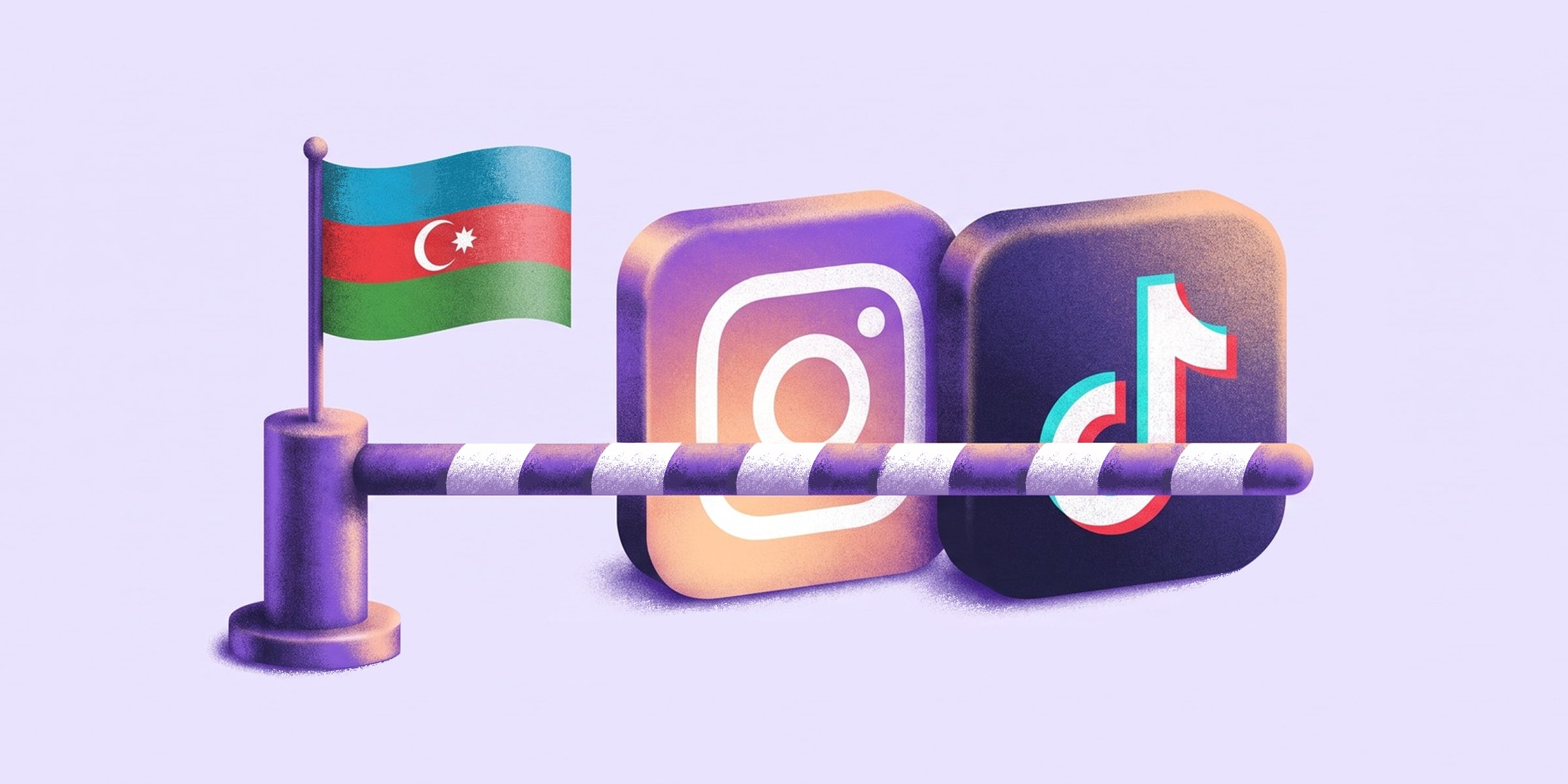
Instagram, TikTok, and X are blocked(nieuw venster) across multiple internet service providers in Azerbaijan. Authorities haven’t confirmed or explained the blocks, and none of the platforms has commented on the situation.
The problems began as protests grew against new school rules that keep girls who wear the hijab out of class.
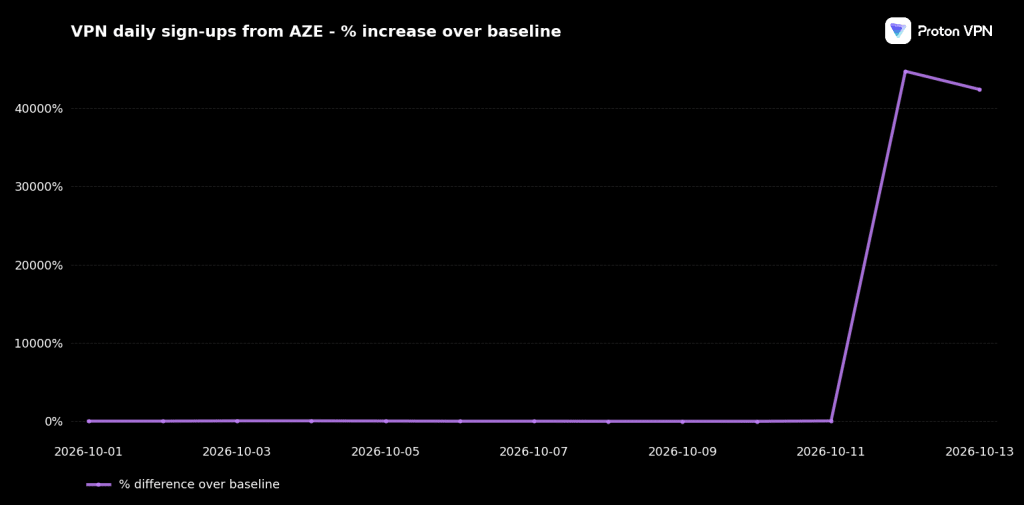
As recorded by the Proton observatory, Proton VPN sign-ups from Azerbaijan began rising on October 11, as student protests spread, and surged to over 4000% above the baseline following the blocks.
What happened?
Reports (nieuw venster)began early Monday morning(nieuw venster) (local time), October 12. On Instagram, feeds stopped updating and profiles and posts would not open(nieuw venster). Then the platform stopped loading completely. On TikTok, uploads failed first, and then the app stopped opening.
Instagram and TikTok users told Agence France-Presse (AFP)(nieuw venster) that videos wouldn’t load, and some said the platforms worked only through a VPN. Outage trackers logged complaints from Azerbaijan but found no global outage(nieuw venster) on either platform. On October 13, NetBlocks confirmed(nieuw venster) that access to TikTok, Instagram, and X was blocked across multiple internet service providers.
Some social media users linked the disruption to videos of the school protests(nieuw venster) that were spreading on the platforms. One Baku activist, speaking anonymously, said that calls to protest(nieuw venster) were spreading through Instagram and TikTok, many of them from abroad. No official statement supports this, but it seems a likely explanation for the blocks.
As of October 14, we’ve found no reports that access has been restored, or that other platforms or mobile internet have been affected.
A school dress code sparked the protests
On September 21, Azerbaijan’s government approved new school uniform rules(nieuw venster) that bar clothing which conflicts with the “secular nature of education”. From October 6, similar rules applied to teachers. The rules don’t name the hijab, but rights defenders say they target it(nieuw venster).
On October 12, schools began to enforce the rules. In several Baku schools, girls who wear the hijab were turned away. Some sat outside their schools and studied there in protest(nieuw venster), and a teacher who wears the hijab taught a class outdoors. Other students boycotted lessons in solidarity(nieuw venster).
That day, the Interior Ministry said police arrested 37 people in Baku(nieuw venster) after protesters confronted school staff and disrupted traffic. According to pro-government outlet Minval, protesters set fire(nieuw venster) to a school director’s car and tried to set fire to a school, but nobody was injured. Unofficial arrest counts are higher. Activists say(nieuw venster) that more than 200 people have been detained, and pro-government media report a similar figure(nieuw venster).
The “hijab ban” has also strained relations with neighboring Turkey(nieuw venster). An adviser to President Recep Tayyip Erdoğan called the new rules unacceptable and said he expected Azerbaijan to reverse them. Azerbaijan’s ruling New Azerbaijan Party told Ankara to stay out of its internal affairs.
Public protest is rare in Azerbaijan, where the authorities tightly restrict unsanctioned gatherings(nieuw venster). President Ilham Aliyev’s government has faced Western criticism(nieuw venster) over how it treats political opponents and independent media.
Azerbaijan restricted social media during past crises
This isn’t the first time Azerbaijan has cut off access to social media during a crisis:
- September 2020: During fighting with Armenia over Nagorno-Karabakh, the government restricted most major social media platforms(nieuw venster) and slowed the internet for over a month (as we reported at the time).
- September 2022: TikTok was restricted(nieuw venster) on several internet providers during border clashes.
- September 2023: An official told AFP that TikTok was blocked “temporarily”(nieuw venster) after military operations began in Nagorno-Karabakh. Access returned on October 31(nieuw venster). The Proton VPN Observatory recorded a +2,500% over baseline increase in sign-ups from Azerbaijan on September 20, 2023.
A new law allows blocking without a court order
This year, Azerbaijan gave its authorities new powers over online platforms(nieuw venster), which must now register in Azerbaijan or open a local office, and check users’ ages. If they don’t comply, they face fines, an advertising ban, and step-by-step slowing of their traffic.
The same amendments widen the reasons authorities can block a website without a court decision. New reasons include insults, defamation, and “disinformation” that threatens public safety. No official has said this law is behind the current blocks.
How to reach Instagram, TikTok, and X in Azerbaijan
Blocking social media during protests cuts people off from news and from each other, just when they need both most. But a block inside Azerbaijan doesn’t reach servers outside it. If Instagram, TikTok, or X doesn’t load, simply connect to a VPN server outside the country.
Our Free plan has no data or time limits. It also includes Stealth, our protocol that disguises a VPN connection to get past censorship and VPN blocks. If our website doesn’t load, you can get the apps from the Apple App Store, Google Play, the Amazon Appstore, Github, and F-Droid.