Días antes de las elecciones generales de Uganda del 15 de enero, los funcionarios del gobierno negaron públicamente los planes para restringir el acceso a internet. A principios de enero, las autoridades dijeron a los medios locales que no habría cierre de internet durante la votación(ventana nueva).
El martes, solo unos días antes de que abrieran las urnas, Uganda ordenó una suspensión nacional del acceso público a internet, citando la necesidad de frenar la “desinformación” y el “fraude electoral(ventana nueva).”
Para la gente en el terreno, esto no fue una sorpresa.
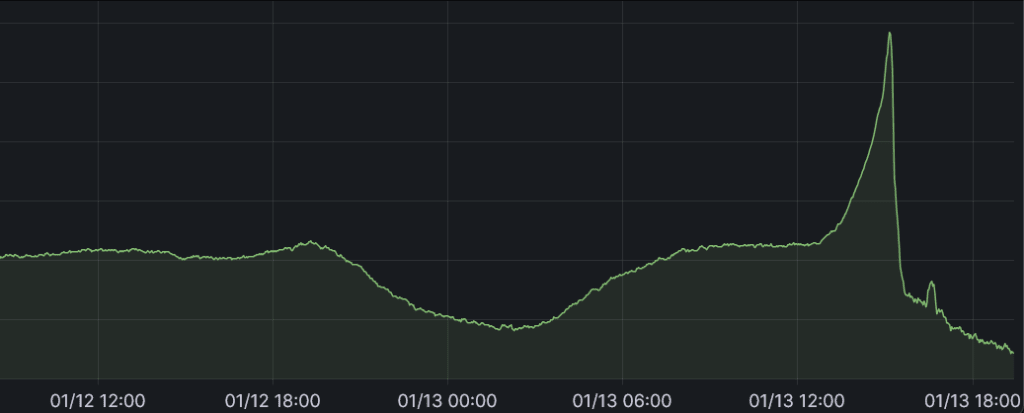
En las semanas previas a las elecciones, Proton VPN vio dos grandes aumentos de registros desde Uganda, cada uno superando el 250 %, ya que la gente anticipaba un apagón. Cuando el cierre realmente comenzó, los registros de Proton VPN desde Uganda se dispararon más del 8.000 %(ventana nueva), mientras la gente intentaba reconectarse con el mundo exterior. El pico ocurrió en el lapso de una hora.
El grupo de monitorización independiente de internet NetBlocks confirmó(ventana nueva) una interrupción a escala nacional, coincidiendo con los avisos oficiales de la Comisión de Comunicaciones de Uganda ordenando restricciones para “mitigar la rápida propagación de desinformación.”
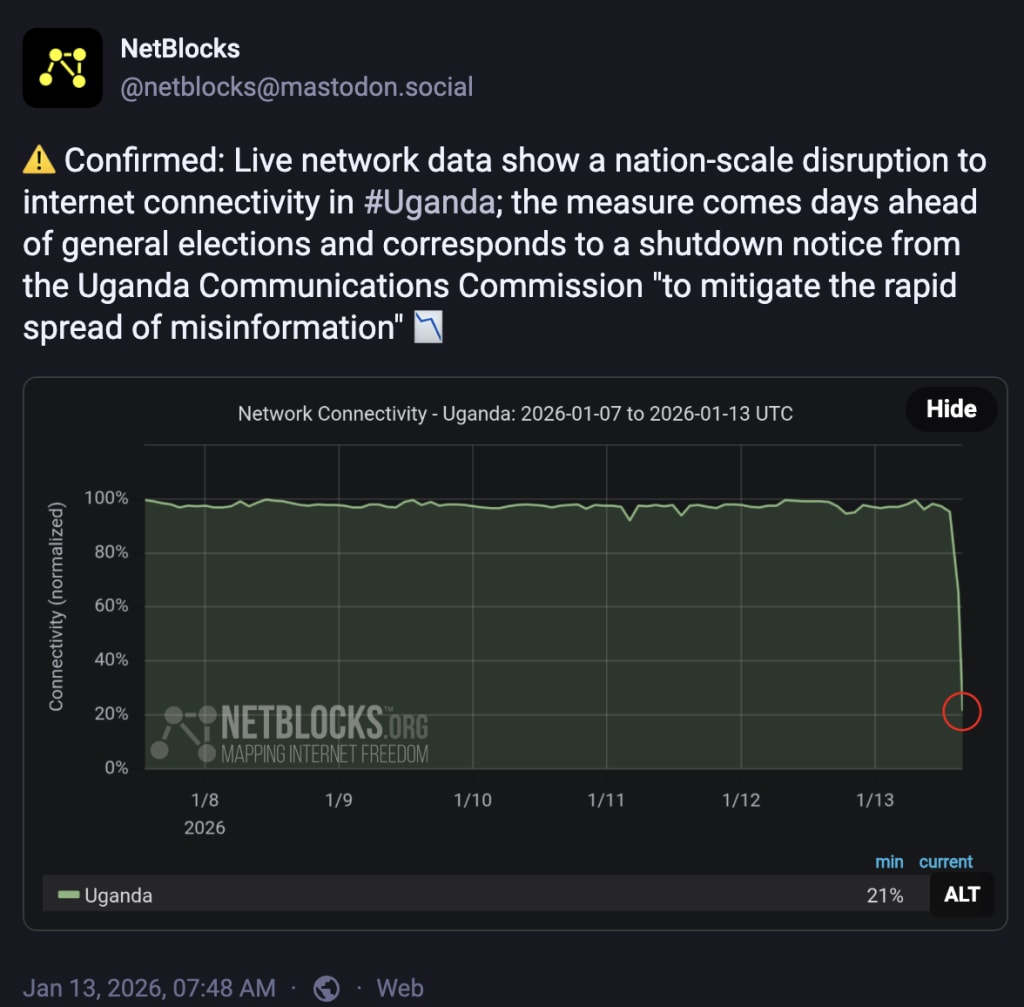
Aunque las autoridades indicaron un cierre amplio de los servicios de internet, los datos de monitorización muestran que algunas conexiones permanecen activas. La caída inicial fue inmediata, seguida de una disminución gradual, lo que puede indicar una implementación por fases en todas las redes.
Este patrón se está volviendo cada vez más familiar.
En todo el mundo, los períodos electorales ahora a menudo coinciden con cierres de internet(ventana nueva), limitaciones o prohibiciones de plataformas. Los gobiernos a menudo enmarcan estas acciones como ‘salvaguardias temporales’. En realidad, cortan a periodistas, grupos de la sociedad civil, voces de la oposición y personas comunes en el momento en que el acceso a la información más importa.
El cierre de Uganda destaca un cambio más amplio: la gente ya no toma las garantías oficiales al pie de la letra. Planean apagones digitales de la misma manera que algunos podrían prepararse para tormentas. Los datos muestran que los ugandeses esperaban ser desconectados y actuaron con antelación.
En Proton, creemos que el acceso seguro a internet es una piedra angular de las sociedades democráticas. Cuando los gobiernos cierran la conectividad durante las elecciones, proteger el acceso a la información se convierte en una necesidad.