콘텐츠 전송 네트워크(CDN)는 인터넷 콘텐츠를 더 빠르고 안정적으로 전달하기 위해 함께 작동하는 지리적으로 분산된 서버 네트워크입니다. 모든 사용자가 단일 원본 서버에서 콘텐츠에 접근하는 대신, CDN은 이미지, 동영상, 스타일시트, JavaScript 파일과 같은 정적 자산의 복사본을 전 세계 사용자와 더 가까운 곳에 위치한 서버에 캐시합니다.
이를 소매 체인에 비유해 보겠습니다. 모든 사람이 제품을 사기 위해 하나의 거대한 중앙 창고 본사로 이동하는 대신, 인기 상품을 비축한 지역 매장이 모든 도시에 있습니다. 그러면 필요한 것을 더 빨리 얻을 수 있고, 중앙 창고는 더 적은 트래픽을 처리하게 됩니다.
전 세계적으로 상위 100만 개 웹사이트 중 약 81%(새 창)를 포함하여 약 4,600만 개의 웹사이트가 CDN을 사용(새 창)합니다. 주요 CDN 제공업체로는 Akamai Technologies와 거의 어디에나 존재하는 Cloudflare가 있습니다(Cloudflare 하나만 사용하는 웹사이트도 2,400만 개(새 창)가 넘습니다).
CDN은 왜 존재하나요?
전통적으로 웹사이트는 하나의 물리적 국가에 있는 단일 서버에 호스팅되었습니다. 방문자가 모두 그 서버 근처에 살고 있다면 잘 작동합니다. 하지만 사용자가 여러 국가(또는 대륙)에 퍼져 있으면 문제가 나타납니다:
- 지연 시간(물리적 거리로 인한 느린 로딩 시간)
- 대역폭 병목 현상
- 트래픽 급증 시 서버 과부하
- DDoS 공격(새 창)에 대한 더 높은 취약성
CDN은 콘텐츠를 전 세계 여러 서버에 분산함으로써 이를 해결합니다. 즉, 귀하가 뉴욕에 있다면 미국 기반 서버에서 콘텐츠를 받게 되고, 같은 웹사이트를 방문하는 런던 방문자는 유럽 서버에서 콘텐츠를 제공받게 됩니다.
CDN의 이점은 무엇인가요?
CDN은 다음을 개선합니다:
- 속도: 콘텐츠가 더 짧은 물리적 거리를 이동합니다
- 확장성: 트래픽 급증(예: 세일 또는 바이럴 이벤트 중)에도 사이트가 다운되지 않습니다
- 가동 시간: 하나의 서버가 실패하면 다른 서버가 대신합니다
- 보안: 대부분의 CDN은 DDoS 공격에 대한 보호를 지원합니다
CDN은 어떻게 작동하나요?
CDN은 다음으로 구성됩니다:
- 원본 서버. 웹사이트가 실제로 존재하는 “주” 서버입니다.
- 원본 서버의 이미지, CSS 파일, JavaScript 및 동영상과 같은 정적 콘텐츠를 저장(“캐시”)하는 엣지 서버. Cloudflare와 같은 대형 CDN은 전 세계에 수백 개의 이러한 분산 엣지 서버를 운영할 수 있습니다.
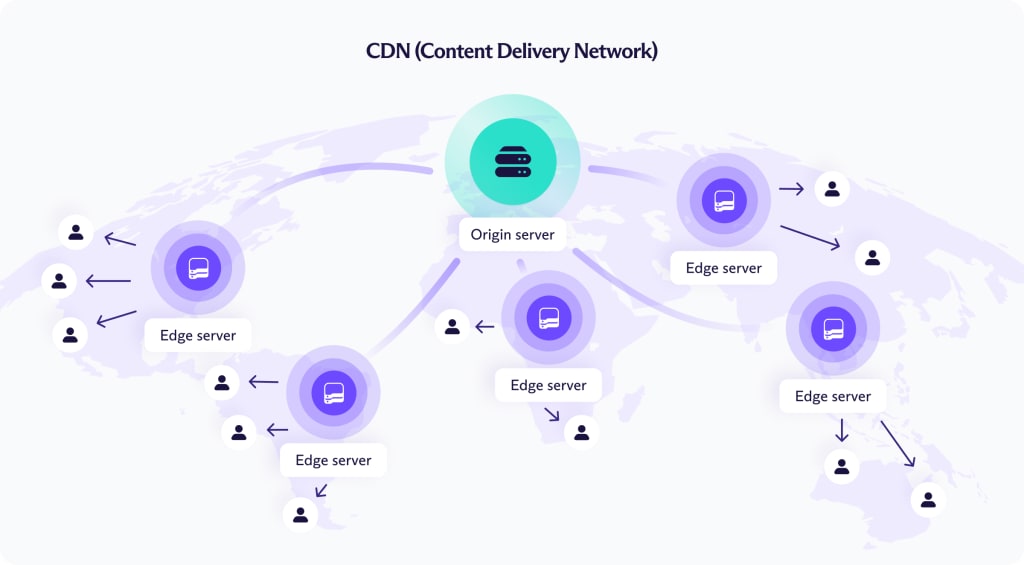
CDN을 사용하는 웹사이트를 방문하면 과정은 다음과 같이 진행됩니다:
- 사용자 요청: 웹사이트를 방문하면 브라우저가 콘텐츠 요청을 보냅니다.
- DNS 확인: CDN의 DNS 시스템이 귀하에게 콘텐츠를 제공하기에 가장 적합한 서버를 결정합니다. 일반적으로 귀하와 가장 가까운 서버가 선택됩니다.
- 캐시 확인: 엣지 서버가 요청된 콘텐츠를 캐시하고 있는지 확인합니다.
- 전달: 캐시되어 있으면 콘텐츠가 즉시 전달됩니다. 그렇지 않으면 엣지 서버가 원본 서버에서 이를 가져와 향후 요청을 위해 복사본을 캐시한 뒤 귀하에게 전달합니다.
- 동적 콘텐츠: 개인화된 페이지와 같은 동적 콘텐츠의 경우, CDN은 연결 경로를 최적화하면서 요청을 원본 서버로 라우팅할 수 있습니다.
중요한 점은 동일한 CDN을 사용하는 모든 웹사이트가 CDN의 공유 엣지 서버를 통해 콘텐츠를 라우팅한다는 것입니다. 즉, 비슷한 지리적 지역에 서비스를 제공하는 수백 개의 서로 관련 없는 웹사이트가 해당 지역의 CDN 엣지 서버 IP 주소를 공유할 수 있습니다.
CDN과 과잉 차단의 위험성
자국 축구 경기의 불법 스트리밍 서비스를 막기 위해, 스페인의 최고 축구 협회 LaLiga는 스페인 인터넷 서비스 제공업체가 CDN 제공업체 Cloudflare에 속한 수천 개의 IP 주소를 차단하도록 요구하는 법원 명령을 확보했습니다. 이는 해당 IP 주소를 불법 스트리밍 서비스와 연결했기 때문입니다.
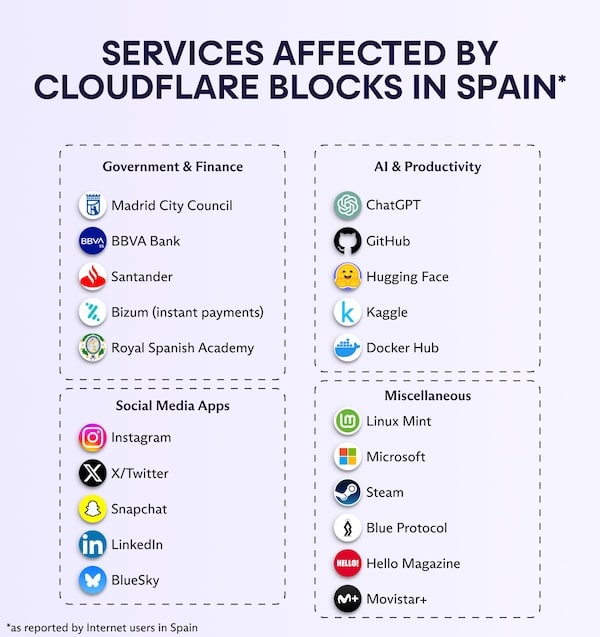
문제는 이 IP 주소들이 Cloudflare의 엣지 서버에 속해 있으며, 이 서버들은 수천 개(잠재적으로는 수백만 개)의 합법적인 웹사이트에서도 사용된다는 점입니다. 이로 인해 스페인에서는 수백만 명이 GitHub, ChatGPT, 정부 웹사이트, 은행 서비스를 포함해(새 창) 일부 인기 사이트에 안정적으로 접근하지 못하게 되었습니다.
CDN에 대한 최종 생각
콘텐츠 전송 네트워크는 이제 오늘날의 웹에 필수적인 인프라가 되었으며, 귀하가 기대하게 된 빠르고 안정적인 온라인 경험을 조용히 뒷받침하고 있습니다. 지리적으로 분산된 엣지 서버 전반에 콘텐츠를 분산함으로써 CDN은 지연 시간을 줄이고, 트래픽 급증을 흡수하고, 가동 시간을 개선하며, 중요한 보안 계층을 추가합니다.
CDN의 유용성 상당 부분은 보이지 않는다는 점에 있습니다. 인터넷에 있는 모든 웹사이트의 4분의 3 이상에서 사용되지만, 대부분의 사람들은 이에 대해 생각조차 하지 않습니다. 그러나 CDN은 오늘날 웹사이트의 약 4분의 3 뒤에서 작동하며, 지리적 위치와 관계없이 콘텐츠가 빠르고 안정적으로 도달하도록 보장합니다.
최근 정부, 법원, 기업 이해관계가 인터넷 서비스를 차단한 사례들은 더 넓은 인터넷에 불가피하게 상당한 부수적 피해를 주고 있습니다.